Electrical Safety Tips for Older Homes In Bulli And The Illawarra
If your home was built before the 1980s, there's a reasonable chance the electrical system inside the walls hasn't kept pace with the demands of modern living. Bulli and the wider Illawarra region are full of character homes and while they offer plenty of charm, their electrical infrastructure can present real safety risks. Whether you've lived in yours for decades or recently moved in, knowing what to look for (and when to call an electrician in Bulli) can make a genuine difference to the safety of your home.
This guide covers the most common electrical concerns in older Illawarra homes, what they mean in practice, and how a licensed residential electrician can help you manage them safely.
Understanding Why Older Wiring Becomes a Problem
Electrical wiring that was installed 40 or 50 years ago was designed for a very different household. Back then, a typical home ran a fridge, a television, some lights and a few smaller appliances. Today's homes routinely run air conditioners, dishwashers, washing machines, multiple computers and large-screen televisions — often simultaneously.
The wiring itself can also deteriorate over time. Insulation becomes brittle, connections loosen and materials that were considered safe in an earlier era are now understood to carry higher risks.
Common issues in older wiring include:
- Degraded rubber or cloth insulation that no longer provides reliable protection
- Aluminium wiring, which expands and contracts differently to copper and can loosen at connection points
- Undersized cables that are not rated for the loads they now carry
- Wiring run through wall cavities without adequate protection or support
A qualified electrician can assess what's inside your walls without unnecessary disruption and recommend targeted upgrades where they're genuinely needed.
Switchboards: The Control Centre of Your Home's Electrical System
In many older Illawarra homes, the switchboard still contains ceramic fuses rather than modern circuit breakers. Ceramic fuses aren't inherently dangerous, but they offer far less protection than their modern equivalents and can be replaced incorrectly, with a fuse wire rated too high for the circuit, which removes the protection altogether.
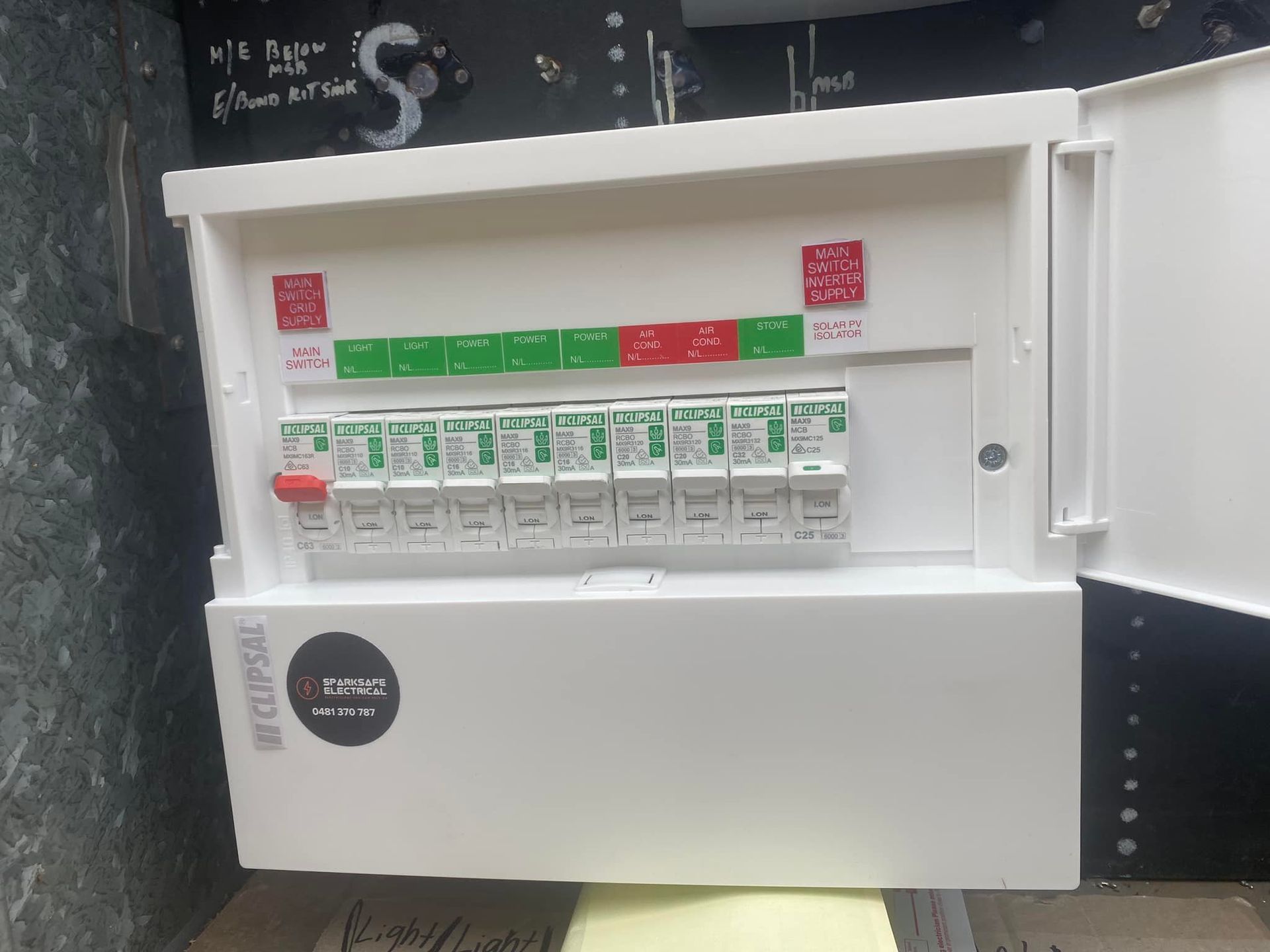
A switchboard upgrade replaces old fuse equipment with modern circuit breakers and, crucially, adds residual current devices (RCDs). RCDs monitor current flowing through a circuit and cut power within milliseconds if a fault is detected. They are now mandatory in new installations for good reason: they save lives.
Signs your switchboard may need attention:
- Fuses that blow regularly or need frequent replacement
- A board that feels warm to the touch
- Visible corrosion, rust, or signs of past overheating
- No RCD protection on power and lighting circuits
Switchboard upgrades are not a minor job, but they are one of the most meaningful investments you can make in an older home's safety.
Powerpoints, Outlets and Overloaded Circuits
It's common in older homes to find a limited number of power outlets per room — sometimes just one or two double GPOs in spaces where modern life demands considerably more. The temptation is to solve this with power boards and adaptors, but chaining these together puts sustained load on a circuit that was never designed for it.
Overloaded circuits generate heat. Heat degrades wiring over time and, in worst-case scenarios, can ignite materials inside the wall cavity. Having additional outlets installed by a licensed electrician in Bulli is a straightforward solution that eliminates the need for excessive powerboard use.
Other outlet-related concerns in older homes include:
- Two-pin outlets without an earth connection, which offer no protection against earth faults
- Loose outlets that move or spark when a plug is inserted or removed
- Outlets installed too close to water sources, such as in older kitchens and bathrooms
Replacing outdated outlets with correctly earthed, weatherproof or safety-switch-protected alternatives is work your electrician can complete efficiently during a standard service visit.
Smoke Alarms: Meeting Current Requirements
NSW legislation requires interconnected photoelectric smoke alarms in all residential properties. Homes that predate these requirements may still have older ionisation-type alarms, single standalone units, or in some cases, no working alarms at all.
The distinction between ionisation and photoelectric matters. Photoelectric alarms respond faster to slow, smouldering fires — the type most likely to start at night and allow toxic smoke to build before flames are visible. Ionisation alarms, by contrast, are less responsive to this kind of fire and more prone to nuisance triggering from cooking.
A residential electrician can assess your current setup and install interconnected photoelectric alarms that comply with NSW requirements. Interconnection means that if one alarm triggers, all alarms in the home sound simultaneously — important in larger or multi-storey homes where a fire in one area may not be immediately audible elsewhere.
Ceiling Fans and Light Fittings in Older Homes
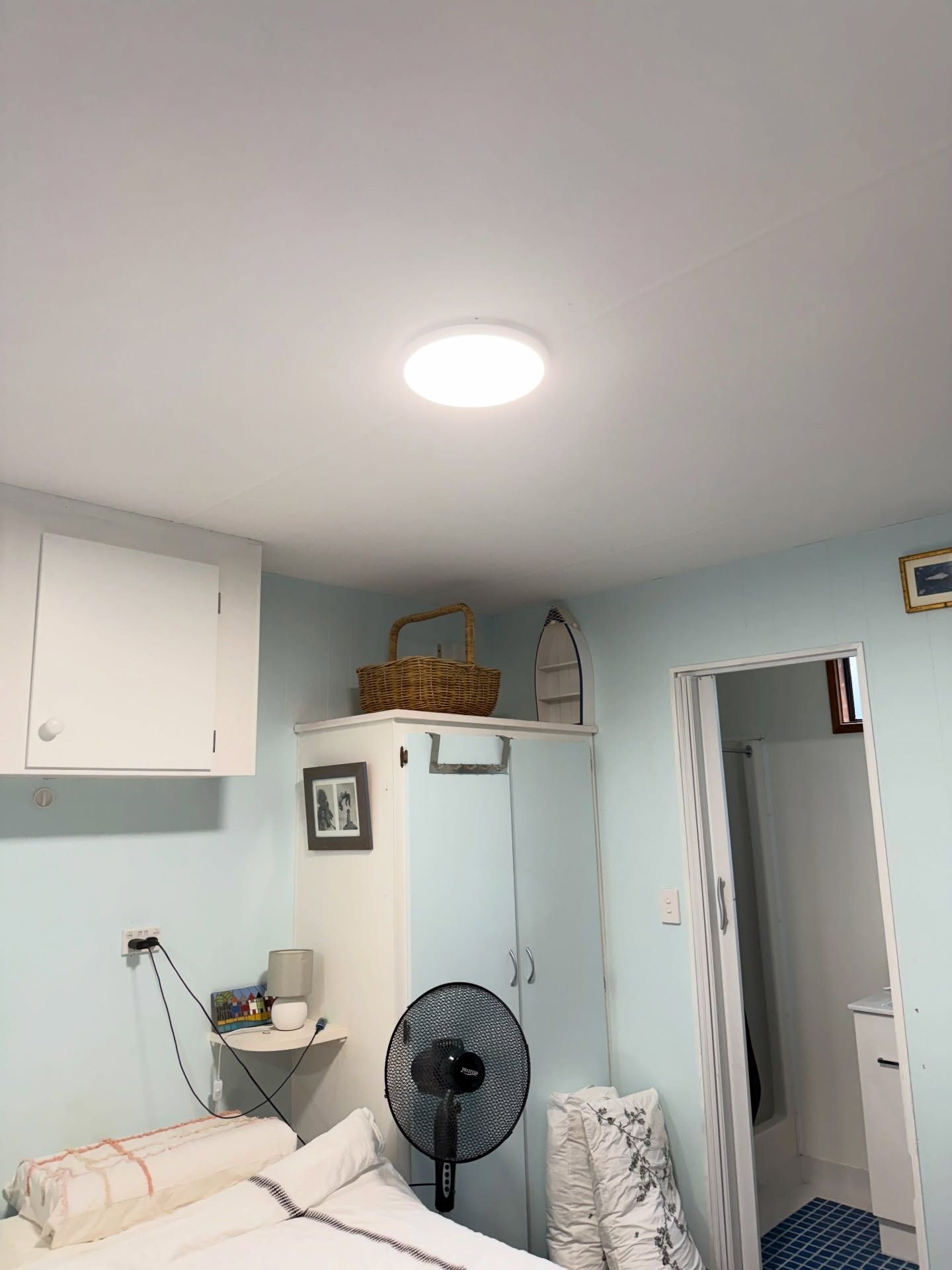
Older light fittings were designed for incandescent globes, which run cooler and draw less power than some of the retrofit LED options available today — and considerably less than halogen globes, which became common in the 1990s and 2000s. Fittings that have been used with globes exceeding their rated wattage may show heat damage inside the canopy, which can compromise the wiring connections at the fitting itself.
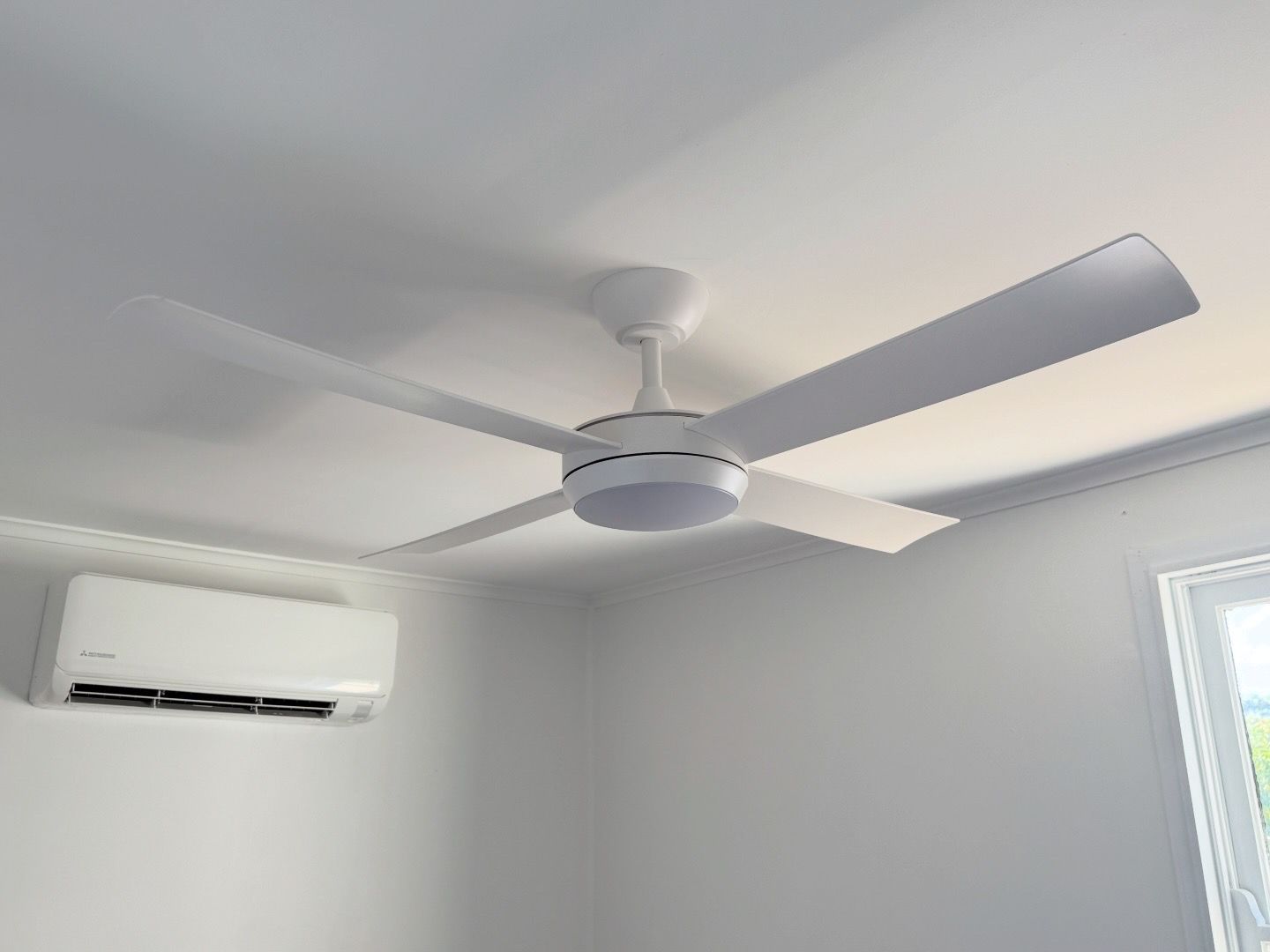
Ceiling fans are another area worth attention. In older homes, fans are sometimes wired without a dedicated neutral or without earthing — both of which are safety concerns. If a ceiling fan wobbles, makes noise, or has wiring that looks improvised or unduly old, an inspection is worthwhile.
Issues to have checked by your electrician:
- Discolouration or heat marking inside light fittings
- Fans without proper earthing or with degraded wiring at the canopy
- Any fitting where the globe has been replaced with a higher-wattage option than the fitting is rated for
Outdoor and Underfloor Electrical in Older Properties
Older Illawarra homes often have electrical installations in areas that have since become more regulated — under-floor spaces, garages, sheds and outdoor entertaining areas. Wiring in these locations is more exposed to moisture, pests and physical damage, and may predate requirements for weatherproof fittings or RCD protection.
Sub-floor wiring is a particular concern. Rats and other rodents are known to chew through cable insulation, and in damp sub-floor environments, degraded wiring can create fault conditions that go undetected for extended periods. A visual inspection can identify obvious concerns that warrant further investigation.
Outdoor and sub-floor electrical safety checks should cover:
- Condition and rating of any exposed or surface-mounted cabling
- Weatherproof rating of outdoor outlets and light fittings
- RCD protection on all outdoor circuits
- Any evidence of rodent damage or water ingress around electrical fittings
Air Conditioning and High-Draw Appliances
Reverse-cycle air conditioners have become standard in Illawarra homes, particularly as summers have grown more demanding. In older homes, adding split systems or ducted air conditioning can place significant load on circuits that were not originally designed for it.
Running a large air conditioning unit on a shared general-power circuit can cause nuisance tripping, and in some cases can exceed what the wiring is safely rated to carry. Dedicated circuits for high-draw appliances are the correct solution — each appliance gets its own circuit from the switchboard, with appropriate cable sizing and protection.
This applies to other high-draw appliances as well:
- Electric ovens and cooktops
- Instantaneous hot water systems
- EV home chargers, which are becoming increasingly common
An electrician can calculate the load requirements accurately and run dedicated circuits where needed, often at the same time as a switchboard upgrade.
What a Safety Inspection Actually Covers
An electrical safety inspection is a structured assessment of your home's wiring, switchboard, earthing and installed electrical equipment. It's not a disruptive process — a qualified electrician works methodically through the property, testing circuits and identifying anything that falls short of current safety standards.
For older homes, an inspection is particularly useful because it gives you a clear picture of what you're working with. Rather than discovering a problem after a fault has occurred, you can identify and address issues in a planned, prioritised way. Inspections are also commonly requested by insurers, property managers and buyers in the context of property transactions.
An inspection report typically covers:
- Switchboard condition and RCD protection
- Earthing and bonding
- Condition of visible wiring and fittings
- Testing of smoke alarms and safety switches
- Any observable non-compliance or deterioration
Looking After Your Home's Electrical System
We at SparkSafe Electrical work with homeowners across Bulli and the broader Illawarra to help them understand and manage the electrical systems in their homes. Whether you're looking for a straightforward safety inspection, a switchboard upgrade or a residential electrician in Bulli for a specific concern you've noticed, we're here to give you a clear, honest assessment and quality workmanship on every job.
If you're in the area and want to talk through what your home might need, get in touch with our team — we're local, licensed and happy to help.